On 22 October, as part of International Open Access Week, the University of Tartu Library hosted a seminar entitled “Who Pays and Who Is Responsible for Open Knowledge?”. The event, held in two parts and two languages, focused on open science policies, practices, and future directions.
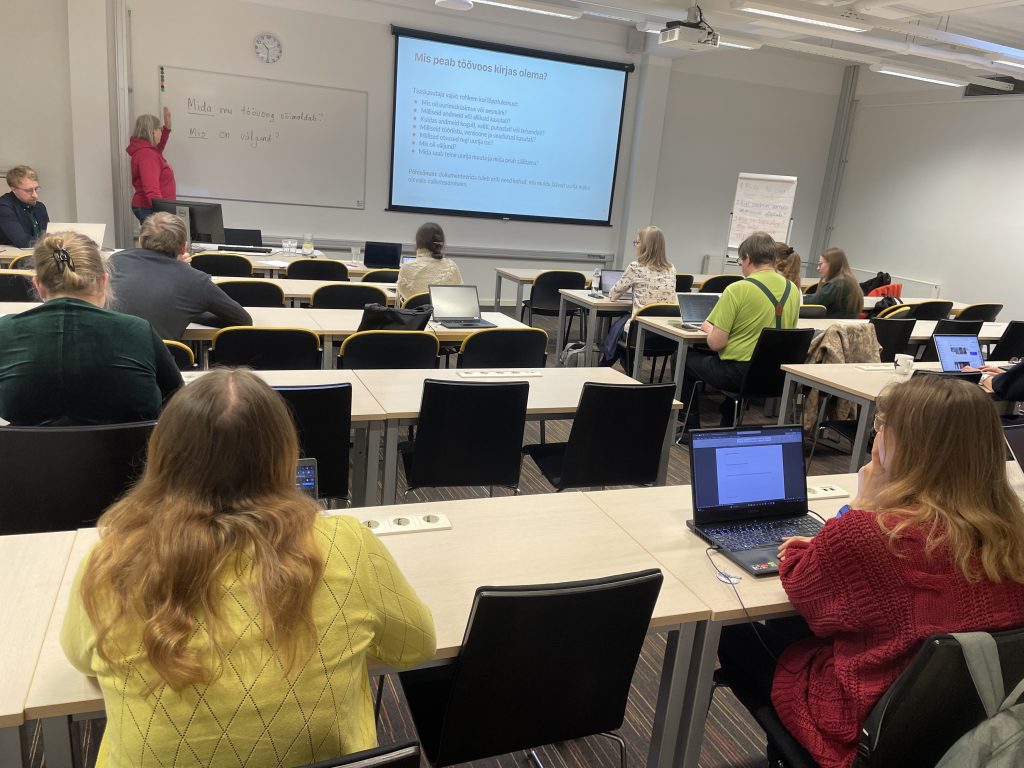
The day began with a workshop organised by the HUM Data Lab of the Estonian Research and Cultural Data Infrastructure, entitled “Making the Research Process Visible: Using and Documenting Workflows”. Participants had the opportunity to gain hands-on experience in creating and using research workflows. The workshop was led by Kadri Vider, Head of the Lab's Data Environment, and researchers Mark Mets (Estonian Literary Museum, Tallinn University) and Kata Maria Metsar (Estonian National Museum). Although primarily aimed at doctoral students in the humanities and social sciences, the workshop also offered valuable insights for participants from other disciplines. The participants discussed why documenting workflows is necessary and what options exist for doing so. In the workshop, they were able to experiment with reusing workflows created by the laboratory’s researchers and also draft a description of their own workflow.
The workshop was followed by a seminar featuring presentations in English, focusing on open science policies and opportunities for their implementation. Guest speakers from the Netherlands and Finland introduced the principles and practical approaches adopted in their respective countries and organisations to advance open science. The presentations explored, for example, measures taken to improve access to research outputs and strengthen the culture of open science. The Dutch experience highlighted, among other developments, a growing preference for open databases as alternatives to traditional subscription-based research information services.
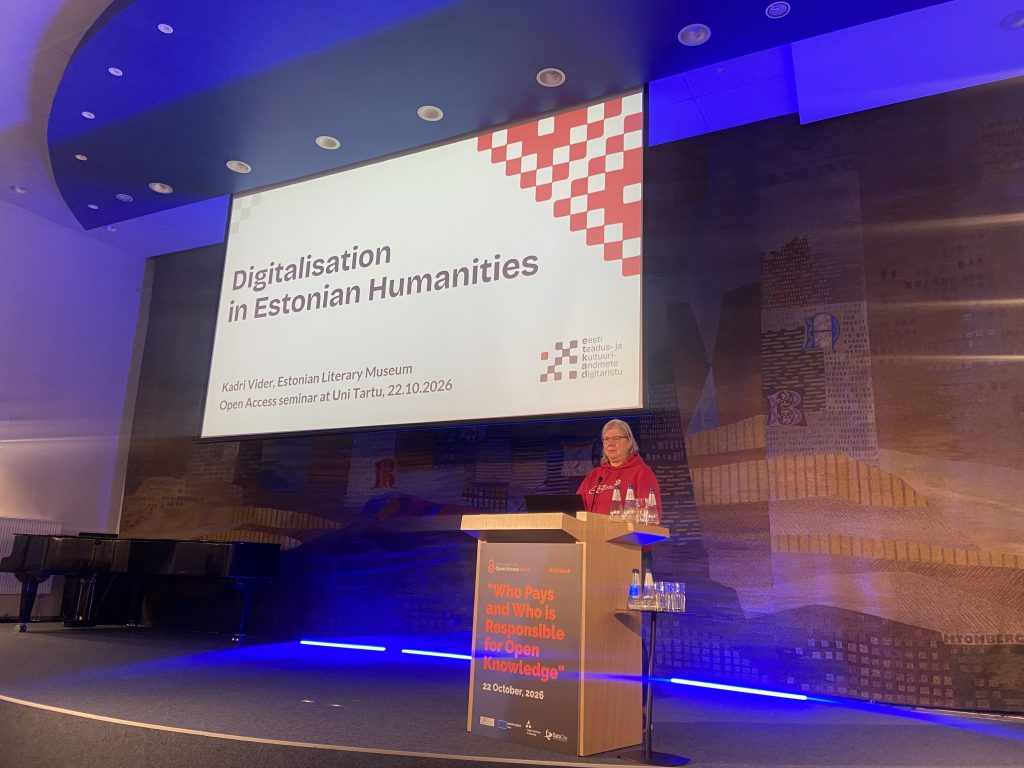
The international presentations were followed by contributions from Estonian experts. A representative of the Estonian Ministry of Education and Research provided an overview of the development and current state of Estonia's open science policy. Other presentations introduced opportunities for open access publishing, various funding schemes, and projects aimed at making research outputs more accessible and transparent. The session concluded with a presentation by Kadri Vider (HUM Data Lab) on the digital transformation of the humanities, illustrated by the results of a survey conducted among humanities researchers.
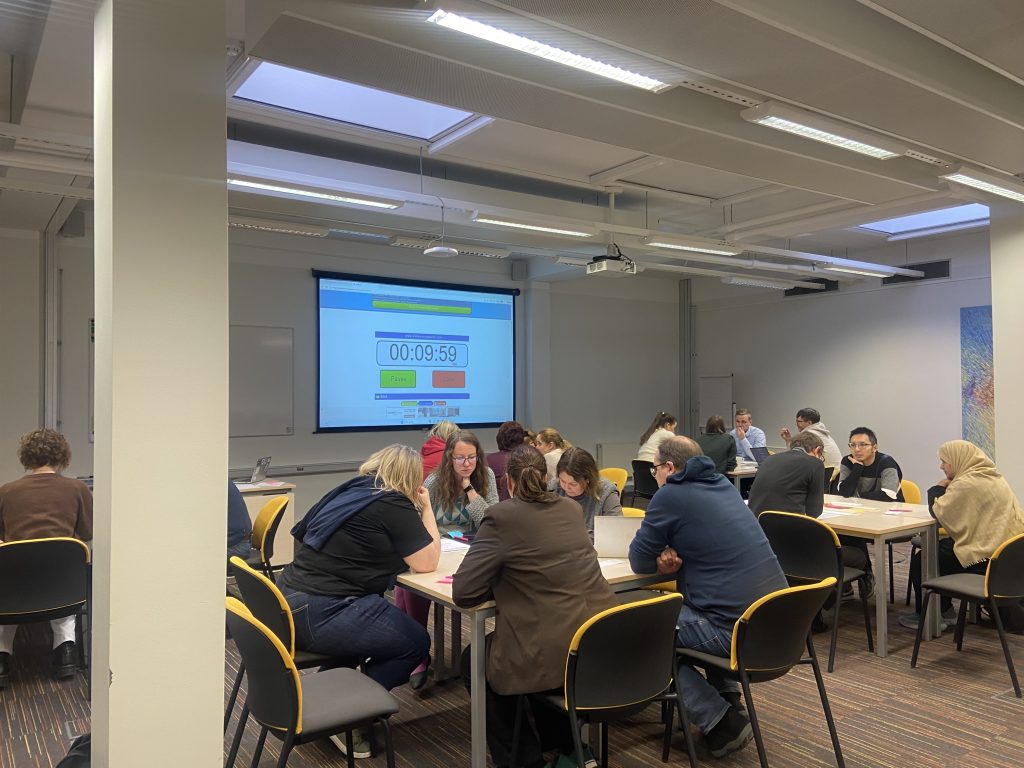
After a break, the programme continued with workshops. The Open Science Policy Hackathon explored which principles, topics, and requirements should be included in an organisation's open science policy. The English-language format also enabled international researchers and doctoral students to participate actively in the discussions. The day concluded with an Estonian-language workshop on the conditions and opportunities for publishing scholarly journals, offering participants practical advice and useful tips.
The presentation slides, video recording, and a summary of the Open Science Policy Hackathon are available in ADA, the University of Tartu's digital repository: Seminar Day “Who Pays and Who Is Responsible for Open Knowledge?”.
The event was supported by the University of Tartu, the European Commission, DataCite Estonia, and the Estonian Research and Cultural Data Infrastructure.