
On 10 June, the DataCite Estonia consortium’s open science seminar, “When Data Comes to Life: Research Data Management and Cooperation in Estonia”, took place at the Estonian University of Life Sciences. The seminar brought together researchers, data stewards, developers of research infrastructures, and representatives of memory institutions to discuss the opportunities and challenges related to collecting, preserving, sharing, and reusing research data in Estonia. Throughout the day, several examples of research data use and management were presented.
The seminar was opened by Kalle Olli, Vice-Rector for Research at the Estonian University of Life Sciences, who emphasised the importance of open science throughout the entire research process. Among other topics, the discussions raised the question of how to make the research process more transparent already at its early stages — for example, doctoral dissertation drafts could be made publicly available for comments, and student papers could be made accessible in machine-readable form.
Professor Steffen Noe spoke about the measurement stations of the Estonian Environmental Observatory and the continuously collected environmental data, highlighting issues related to the preservation, security, and long-term use of big data. Thea Kull, a researcher at the Estonian University of Life Sciences, and librarian Kersti Laupa presented the university’s natural science collections and observation datasets, which have been made available to researchers in Estonia and internationally.
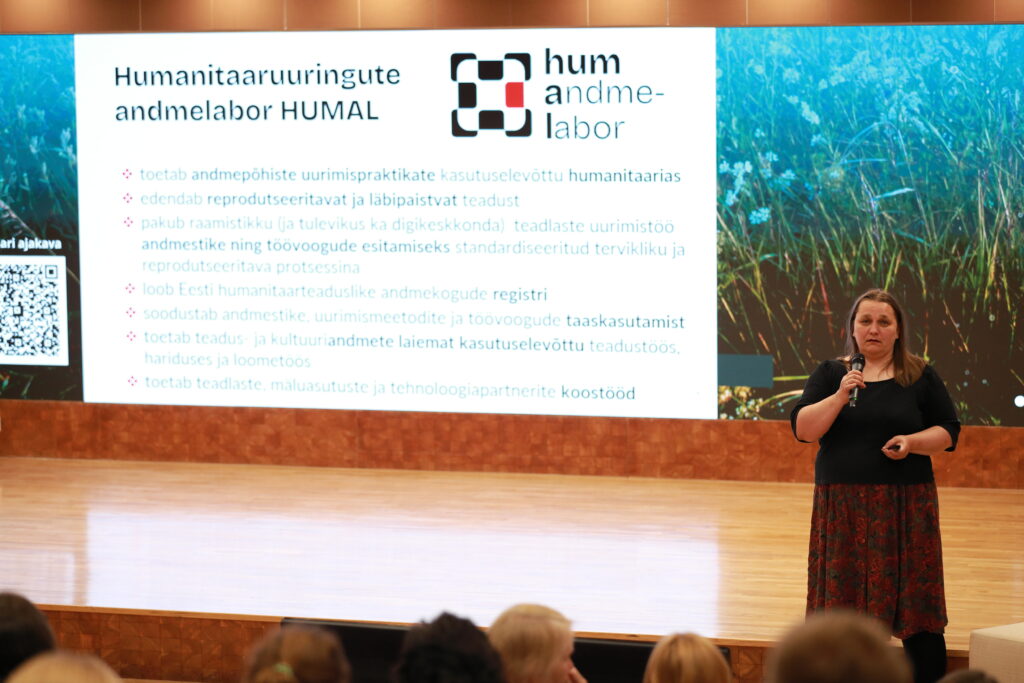
ERCDI Is Developing a Data Infrastructure for the Humanities
Mari Väina and Kata-Maria Metsar introduced the Estonian Research and Cultural Data Digital Infrastructure, ERCDI, and the humanities data lab HUMAL, which is being developed within its framework.
HUMAL aims to support humanities researchers in using data-driven research methods and to create the necessary tools and services for this purpose. One important area of activity is mapping Estonian humanities datasets and gathering information on their availability. HUMAL is also developing workflows that enable researchers to analyse and reuse existing data more easily.
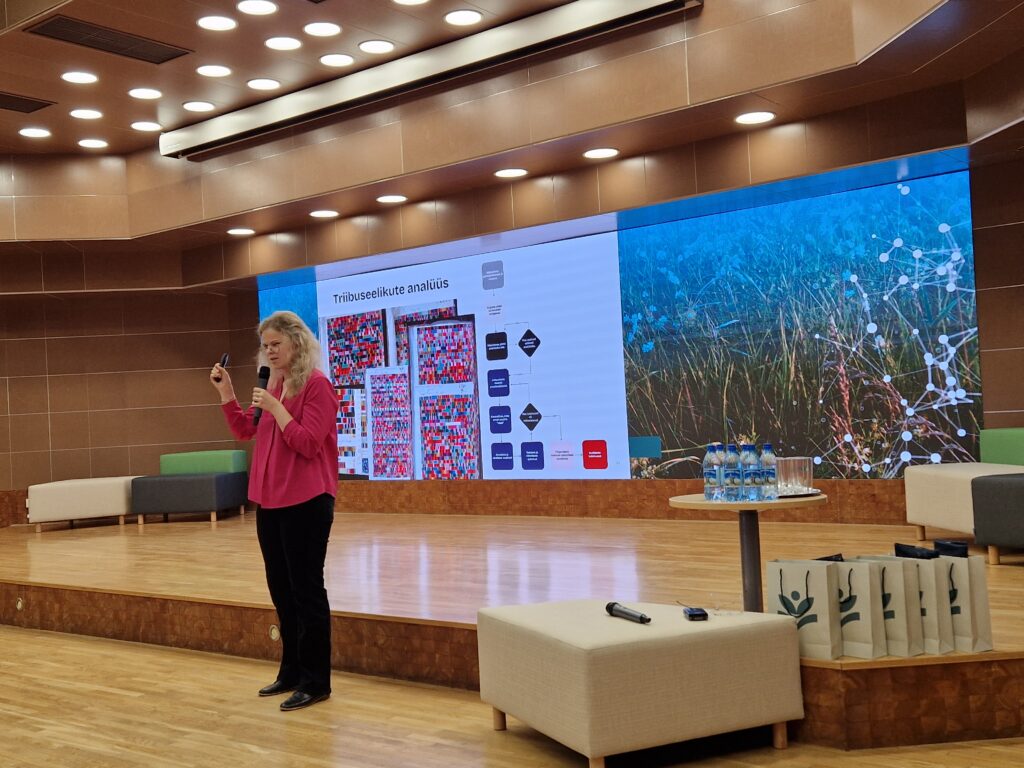
Examples included workflows based on data from the Estonian National Museum, including the analysis of striped skirts. Solutions for studying visitor data and the Finno-Ugric object collection are also being prepared. HUMAL places strong emphasis on the principles of open science: the aim is to make the entire research process as transparent as possible, from data processing to the publication of results.
In the second half of the seminar, the pilot project of the data stewards’ competence network established at the University of Tartu was introduced, along with the renewed DataDOI research data repository. Martin Pook, a researcher in molecular medicine at the University of Tartu, presented experiences from mapping data management culture. A key message from his presentation was that researchers’ data management practices vary greatly, and that sharing knowledge and making support services visible are important parts of advancing open science.
The seminar presentation slides are available in the digital repository of the Estonian University of Life Sciences and the recording of the event is available online as well.