Estonian National Archives
19th-century court records full of Estonian peasant life
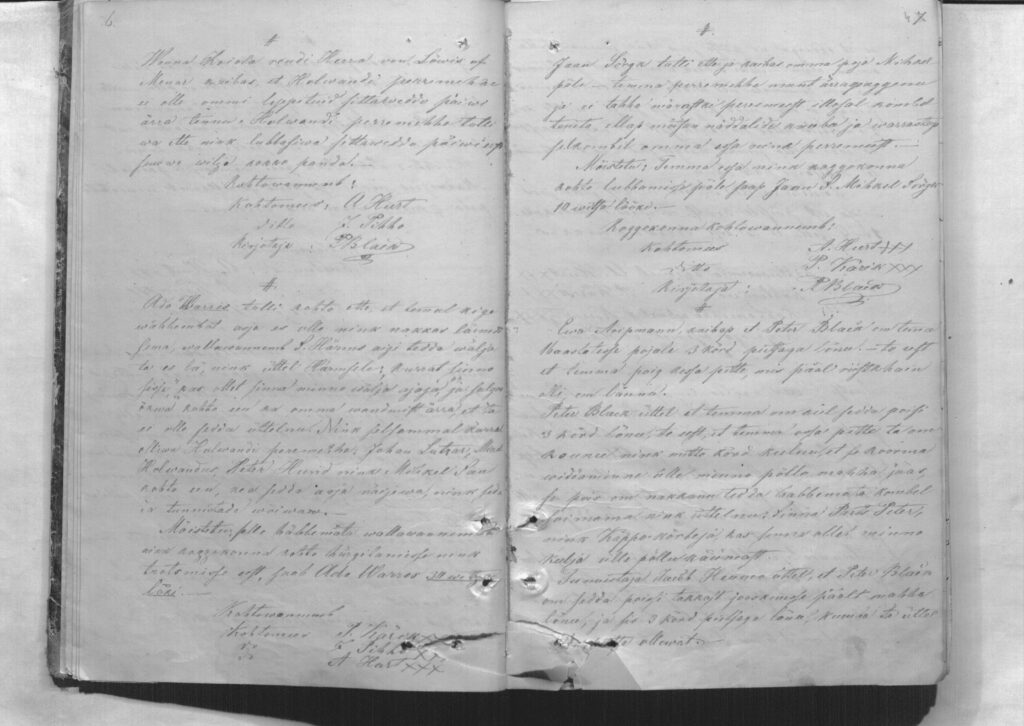
How did our ancestors live in the 19th century? Parish courts offer a window into their world. As the lowest tier courts for the peasantry, a wide range of matters were discussed before them — from insults and horse theft to the care of orphaned children and more. The parish court records teem with episodes from the lives of Estonian peasants and reveal their economic and social relations, living conditions, and attitudes.
The National Archives holds over 2,000 record books from nearly 400 parish courts. Within the Parish Courts crowdsourcing project, volunteers — local and family history enthusiasts — have so far transcribed more than 200,000 court records from the original sources.
In addition to the main text of the records, the CSV dataset contains information about the date and place of the proceedings, the names of the judges, and the subject of the case. Personal and place names occurring in the text are generally also annotated. The data make it possible, for example, to construct a “radar” of peasant life, through which the main concerns brought before the courts and their variation across time and space become visible. For language enthusiasts, the dialectal usage and old orthography found in the records offer further material to explore.